
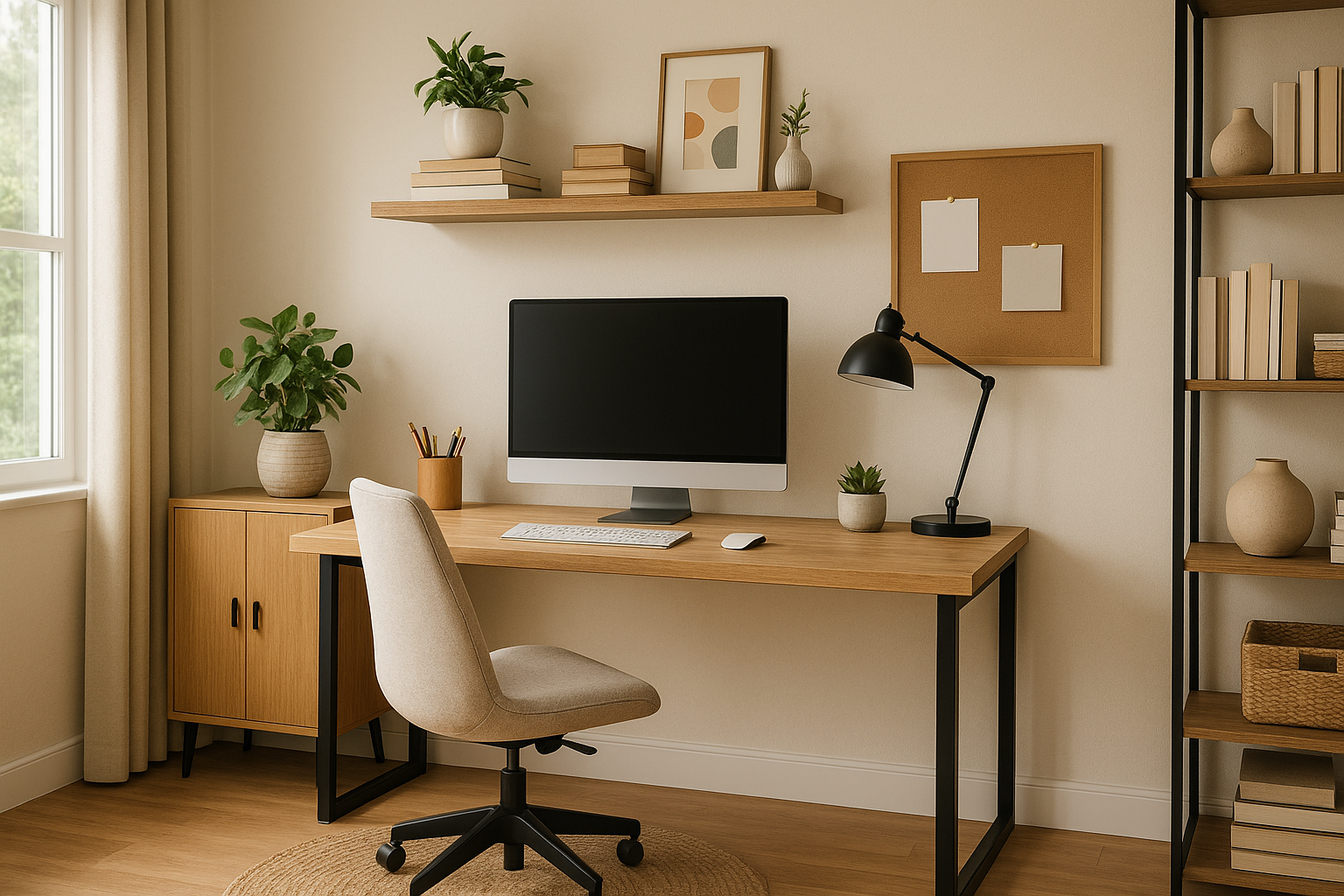
In the age of remote work, your home office isn’t just a luxury — it’s a necessity. But working from home effectively requires more than just a desk and a chair in the corner. A well-designed home office can boost your focus, reduce stress, and even spark creativity.
Whether you have a dedicated room or just a small nook, this guide will help you decorate a workspace that’s both productive and beautiful.
1. Choose the Right Location
Start by picking a space that supports focus and separates work from home life.
- Spare bedroom: Ideal for privacy and shutting the door at the end of the day
- Living room corner: Great with the help of a room divider or bookshelf wall
- Underused hallway or stair landing: Works for compact setups
- Closet office (cloffice): Small space? No problem! Use a converted closet with a desk and shelves
Avoid setting up in your bedroom if possible — your brain associates that space with rest, not work.
2. Invest in a Comfortable Chair
This is one area where function should come before style.
- Choose an ergonomic chair with lumbar support
- Consider adjustable height and armrests
- Use a seat cushion or lumbar pillow for added support
- Try a kneeling chair or standing desk converter for back relief
A beautiful workspace means nothing if you’re physically uncomfortable.
3. Use a Desk That Fits Your Needs
Your desk is the foundation of your workspace.
- Choose a desk with drawers or built-in storage for supplies
- For small spaces, try a wall-mounted drop-leaf desk or a compact writing table
- For creative work, opt for a larger surface for spreading out materials
Make sure the size suits your work style and doesn’t overcrowd the room.
4. Prioritize Lighting
Good lighting = less eye strain + better mood.
- Use natural light by placing your desk near a window (but avoid glare)
- Add a desk lamp with adjustable brightness and color temperature
- Layer in ambient lighting like wall sconces or overhead fixtures
- Use warm white bulbs (2700K–3000K) to reduce tension
Tip: Avoid working under only harsh overhead lights — mix light sources instead.
5. Choose a Calming Color Palette
The right colors can influence your concentration and reduce anxiety.
- Go for soft neutrals, cool blues, greens, or warm grays
- Add pops of energy with accent colors like mustard, navy, or terracotta
- Avoid overly dark or neon tones unless you’re going for a moody, creative vibe
Paint or decorate the wall behind your desk to frame your work zone.
6. Add Storage to Minimize Clutter
A cluttered space = a cluttered mind. Keep it tidy with smart storage.
- Use floating shelves to store books or decor
- Add a rolling cart for supplies that can be moved around
- Try under-desk drawers or cabinets for hidden storage
- Keep cables organized with cord clips or a cable box
When everything has a place, your mind can focus better.
7. Personalize with Intention
Your workspace should motivate and inspire you — not feel sterile.
- Hang artwork or quotes that energize you
- Add a pinboard, whiteboard, or calendar for visual planning
- Include plants for a natural touch and air purification
- Display meaningful objects — just don’t overcrowd your desk
A few well-chosen items make your space feel like yours.
8. Soundproof (or Soften) the Space
Distractions are the enemy of productivity. Reduce noise and increase focus:
- Use area rugs, curtains, or fabric wall hangings to soften sound
- Try noise-canceling headphones or a white noise machine
- Add a door draft stopper if you have gaps under the door
- Play instrumental music or ambient sounds to help concentration
A calm acoustic environment improves mental clarity.
9. Create Zones for Different Tasks
Even in a small office, defining zones improves workflow.
- Desk = focus work
- Chair or reading nook = creative brainstorming
- Shelf = storage or inspiration display
Use rugs, lighting, or furniture placement to subtly define areas.
10. Keep It Flexible and Evolving
Your work needs may change — your space should evolve with you.
- Use modular furniture that’s easy to rearrange
- Update decor seasonally to keep the space fresh
- Rotate inspiration boards, art, or photos to reflect current goals
- Reassess layout every few months for comfort and efficiency
The best home office is one that grows with you.
Final Thoughts: Design a Space That Works for You
Your home office should do more than look good — it should support your goals, your health, and your daily routines. By blending functionality with intentional decor, you can build a space that’s not just for work — but for focus, growth, and creativity.
Decorate with purpose, work with ease, and enjoy the comfort of a space that was designed with you in mind.